Hot Pan on a Quartz Countertop in Madison: What Heat Does
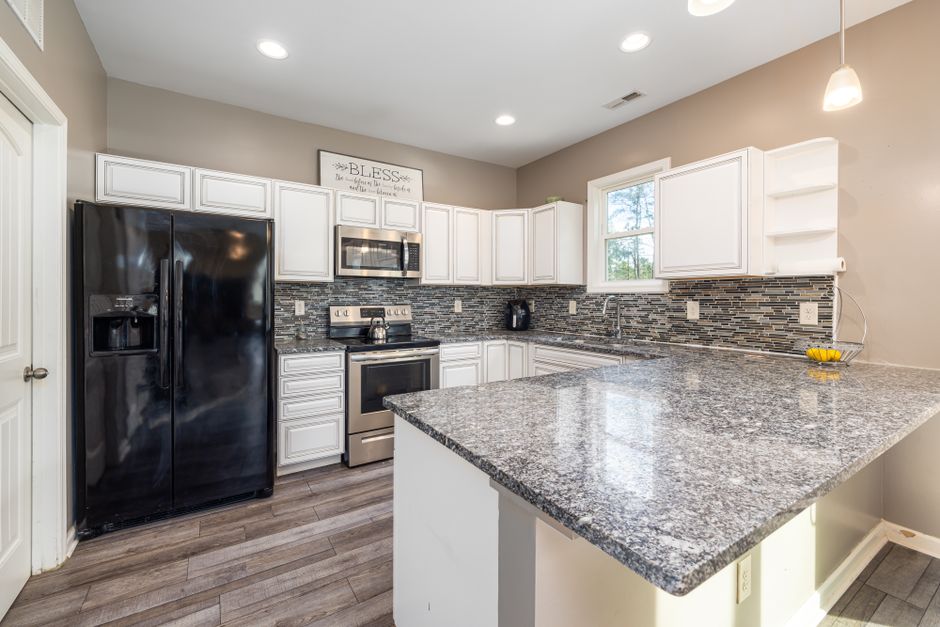
No, a hot pan should never go directly on a quartz countertop. The crushed quartz grains in the slab handle heat well, but the polymer resin holding them together does not, and it can scorch, soften or discolor at temperatures far below what a pan reaches coming off a burner or out of an oven. A trivet costs almost nothing compared with a damaged slab, and heat damage is commonly excluded from quartz warranties, so check your own paperwork to see what it says.
Why Quartz Is Weaker Against Heat Than It Looks
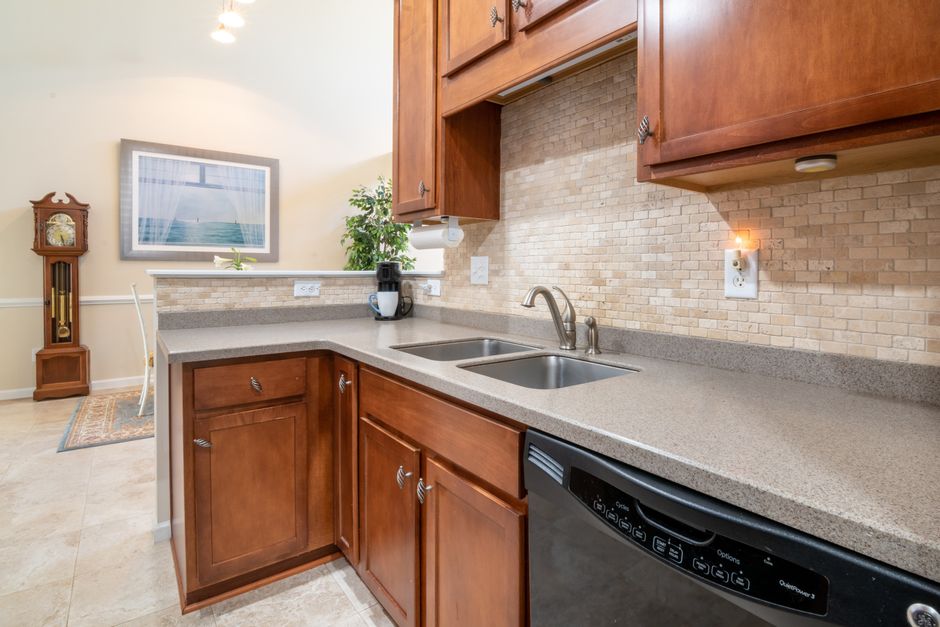
Engineered stone is a composite material: crushed natural quartz (silicon dioxide), pigments and polymer resin. The mineral is tough. The resin is the weak point. Brands such as Cambria and others generally tell owners to use trivets or hot pads, and that advice exists because of the binder, not the stone.
It is tempting to assume quartz must be heatproof because quartz the mineral is heat resistant. That reasoning fails, because the surface you cook near is a blend, and the blend is only as heat tolerant as its resin.
What heat damage looks like
- A yellow or brown ring where the pan sat
- A cloudy white or dull patch
- A hairline crack
Discoloration happens inside the resin, so it generally cannot be scrubbed or polished away the way a surface stain can. Even a few seconds of contact with a very hot pan is not automatically harmless.
Thermal shock and cracking
Thermal shock is the main cracking risk. One spot gets very hot while the slab around it stays cool. The hot area expands faster than its surroundings, and the stress can split the slab. Brief contact with a very hot pan can do more harm than long contact with a warm one.
The worst offenders are cast iron skillets and roasting pans pulled straight from a hot oven. They hold a lot of heat and release it slowly into one small spot. Set the trivet or rack out before you open the oven door, not after.
How Other Countertop Materials Handle a Hot Pan
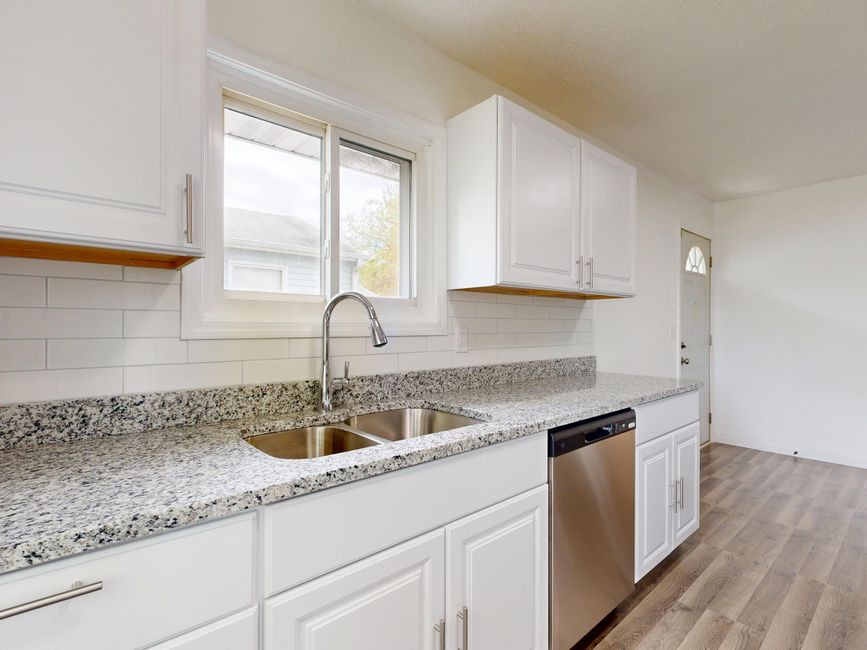
Quartz is on the weak end of the heat spectrum among popular surfaces, but no material is a free pass.
Granite
Granite forms under heat and pressure and tolerates a hot pan far better than quartz. It is not immune:
- It can still crack from thermal shock, especially at cutouts and natural fissures.
- Heat can break down or discolor the surface sealer.
- Many slabs are resin treated at the factory to fill pits and fissures, and that resin can scorch just like quartz binder.
A flamed finish does not change this. Stone flaming only alters the surface texture, not the heat tolerance.
Marble and limestone
These handle heat better than quartz, but they are soft, calcium based stones. Heat can dull a polished finish or leave a mark, and the sealer is vulnerable. They also etch from acidic foods, so pads and boards help them for more than one reason.
Soapstone
Soapstone is among the most heat tolerant natural countertop stones, which is why it is a common choice beside ranges. The tradeoff is that it scratches and dents easily and darkens with oil and use.
Sintered stone and porcelain
These slabs are fired at very high temperatures and tolerate heat much better than quartz. They can still crack from thermal shock or chip at thin edges, so a trivet remains a good habit.
Solid surface
Acrylic solid surface products such as Corian and Avonite scorch and can blister from heat. The difference is repairability: because the color runs through the material, minor burns can often be sanded out and refinished. Quartz is much harder to repair invisibly.
Butcher block
Butcher block scorches and leaves dark rings from hot pans, so treat it like quartz and use trivets. Wood near a cooktop also dries out faster, so oil it more often than wood elsewhere in the kitchen.
Madison Conditions That Raise the Risk
Cold winters widen the temperature gap
Long Madison cold stretches can leave countertop sections along exterior walls, under windows, or on a kitchen island near a drafty patio door noticeably cool. That widens the gap between the pan and the slab when a hot pan lands, so heavy winter cooking deserves extra care on those runs.
Dry heated air and wood
Weeks of forced air heating can make butcher block shrink and open small checks, especially near a cooktop. Re-oil it through the heating season, and keep hot pans off any open checks.
Older homes and slab support
Many neighborhoods, including the Near East Side, the Isthmus and Vilas, have older homes with settled floors or kitchen cabinet runs that are out of level. A slab already under stress from poor support is more likely to crack when heat adds strain. Have a fabricator check that the cabinets are level and the slab is fully supported, particularly around the cooktop cutout.
Late summer canning
Canners, pots of boiling water and hot jars are heavy and very hot. Set jars on a folded towel or wire rack rather than bare stone. That protects the countertop, and it is also the standard way to keep the jars themselves from cracking.
Protecting the Zone Around the Cooktop
Choose real trivets
Pick trivets with feet or an open design so air can circulate under the pan. Silicone mats, cork, wood trivets, and metal trivets with rubber or silicone feet all work. A thin plastic cutting board is not a trivet and can melt onto the surface.
Know where cracks start
Cracks from heat or stress tend to start at inside corners of cutouts, at seams, and on the narrow strips of stone in front of or behind a cooktop. Keep hot items away from these spots even when using a pad. When fabricating new tops, ask for rounded inside corners at cutouts, because sharp corners concentrate stress.
Seams are joined with resin based adhesive, and heat can discolor or weaken them. Do not plan a seam right beside a cooktop, and do not rest pans across one.
Mind the range and cooktop type
With a slide-in or freestanding range, the counter edges beside it pick up radiant heat and get bumped by pan handles. Many ranges also vent oven heat toward the back or under the control panel, which can warm the backsplash and nearby stone. Keep a little clearance and check those edges periodically for discoloration or chips.
For a drop-in cooktop, confirm the installer left the gap the cooktop maker specifies between the cooktop and the stone. Do not shim or caulk the cooktop tight against the slab, because the cooktop and the stone expand at different rates.
Induction does not make this go away. The glass does not heat directly, but the pan heats it by contact, so sliding a hot pan from induction glass onto bare quartz is just as damaging as moving it from a gas burner.
Countertop appliances do slow damage
Slow cookers, electric roasters, griddles, air fryers, toaster ovens and pressure cookers heat their bases for hours. Set them on a wood board or a heat rated mat, and point air fryer and toaster oven vents away from backsplashes and walls.
Checking for Damage and Getting Repairs
Look at the counter at a low angle under good light for haze, rings or color change. Run a fingernail across any line to feel for a crack. Sealer will not help here: quartz is nonporous, is not normally sealed, and a sealer would not shield the resin from heat.
Report damage to your fabricator early. Do not try to fix it with abrasive pads, oven cleaner or other harsh chemicals, which attack the resin and make things worse.
Leave repair or partial replacement to a professional. Cutting or grinding engineered stone releases fine crystalline silica dust, and breathing it causes silicosis. Homeowners should never cut, grind or sand quartz themselves.
The Simple Habit That Settles It
Keep a trivet within arm's reach of every burner and the oven door, and the question mostly answers itself. In a Madison kitchen where winter cold, older framing and heavy cooking all add stress, that small habit protects a quartz top far better than any repair can.